
Are Fertilizers and Garden Chemicals Safe for Pets?

⚡ TL;DR – Quick Safety Summary
- •Fertilizers, pesticides, and herbicides can be toxic if ingested or absorbed
- •Pets are often exposed through paws, fur, or treated grass
- •Symptoms range from mild irritation to serious poisoning
- •Keep pets away from treated areas until fully dry or absorbed
With the sun shining and the weather getting warmer, many people are feeling the pull to get outside and start working on their gardens. Lawns get refreshed, flowers get planted, and that long list of yard projects finally comes to life.
And of course, our furry companions are right there with us — following along, rolling in the grass, sniffing everything in sight, and happily keeping us company.
To help plants grow and keep weeds and pests under control, many gardeners rely on products like fertilizers, weed killers, and insect sprays. But while these products are effective for maintaining a healthy yard, they can pose hidden risks for pets, especially when curious paws and noses get involved.
Types of Garden Products
Garden products fall into several categories, each with different levels of risk depending on the ingredients and how they are used.
Common garden products and their risks ▼
Fertilizers
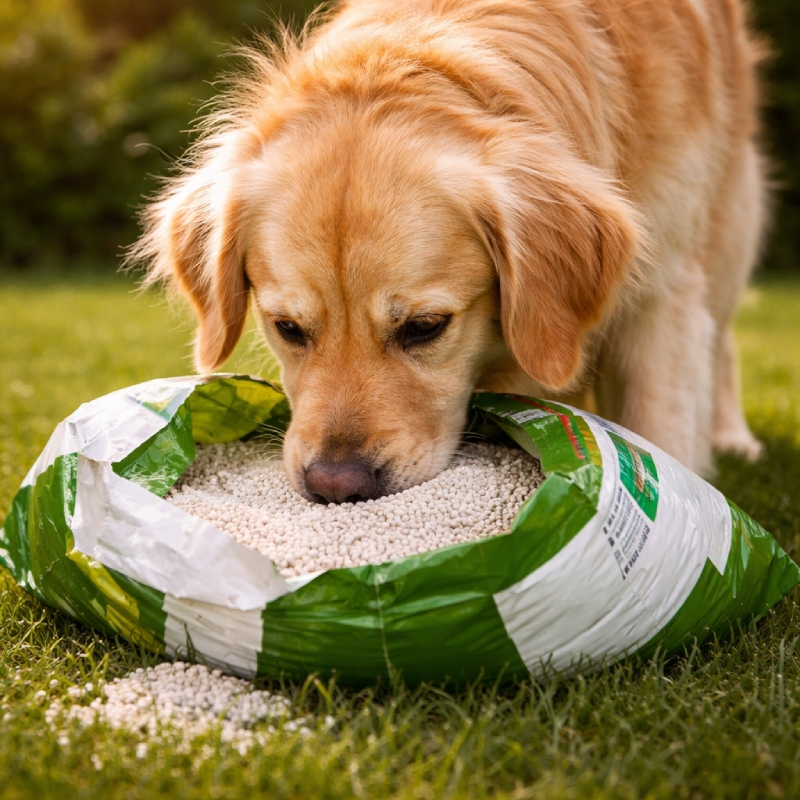
Fertilizers contain nutrients like nitrogen and phosphorus, but may also include additives such as bone meal or blood meal, which can attract pets.

Risks:
- Vomiting or diarrhea
- Ingestion of large amounts may cause toxicity
Pesticides
Pesticides are used to kill insects and can be more toxic depending on the formulation.

Risks:
- Drooling, vomiting
- Tremors or neurological symptoms in severe cases
Herbicides
Herbicides target weeds and vary widely in safety.
Risks:
- Skin irritation
- Gastrointestinal upset if ingested
What counts as exposure
 Walking on treated grass/soil
Eating fertilizer granules
Walking on treated grass/soil
Eating fertilizer granules
What happens to the body
When pets are exposed to garden chemicals, substances can enter the body through ingestion, skin contact, or inhalation. Depending on the product, this can affect the digestive system, skin, or even the nervous system.
Some exposures result in mild irritation, while others can lead to more serious symptoms if not addressed.
Symptoms to Watch For
- Vomiting or diarrhea
- Drooling
- Lethargy
- Skin redness or irritation
- Tremors or unusual behavior (in more serious cases)
What To Do Immediately
If you think your pet has been exposed:
- Remove your pet from the treated area
- Wipe or wash their paws and fur
- Prevent further licking
- Contact your veterinarian if symptoms appear or exposure was significant
- Bring the product label if possible
How vets treat chemical exposure ▼
Treatment depends on the substance and level of exposure:
- Inducing vomiting (if ingestion was recent and safe)
- Activated charcoal to reduce toxin absorption
- Bathing to remove chemicals from fur and skin
- IV fluids and supportive care
- Monitoring for neurological or organ-related effects
Prevention
The best way to protect your pet is to minimize exposure. Keep pets off treated areas until products have fully dried or absorbed. Store chemicals securely, follow all usage instructions, and consider pet-safe alternatives when possible.
Sponsored Placement